My subscription to Life expired, but I still have a subscription to Mad.

Showing posts with label ICOM AH-7000. Show all posts

Wednesday, May 31, 2023

May 31 E-skip


I have been checking 90.9 MHz every morning for any sign of life. As I mentioned before, 90.9 MHz is the only FM band channel that is unoccupied here, so anything heard on 90.9 is an indication that the band is open.

WBUR on 90.9 from Boston was loud and clear at 9 AM, but I did not get back to the radio until 11 AM when the band was hopping with E-skip.

I relogged two stations and logged one new one. I relogged KLRC in Tahlequah, Oklahoma, 1224 miles to the west-southwest and WOWB in Brewton, Alabama, 1058 miles to the southwest.

The new logging was WATP in Laurel, Mississippi, 1106 miles to the west-southwest.

All were heard with the ICOM IC-R8600 receiver and ICOM AH-7000 discone antenna.

Thursday, October 27, 2022

87.9 MHz Mystery Station

About a week ago, I noticed a radio station on 87.9 MHz. It was a Spanish language station playing continuous Spanish contemporary music (perhaps, Spanish Christian contemporary music). The only voices heard were short announcements at the 27 and 57 minutes past the hour. 

Despite taking Spanish in high school and college, I had a difficult time translating the announcements, but I believe that the station is called “Radio de Morte e Vida” (Death and Life Radio).  

Springfield, Massachusetts was mentioned once, so the station may be located in that city or thereabouts, which is about 40 miles to the north-northeast. (I can receive the station on my car radio if I travel north or northeast from my home in the general direction of Springfield. Traveling south of here, there is no signal.)

As you know, there are supposed to be no radio stations on 87.9 MHz in the USA. So when I first heard the station, I figured it was a fly-by-night pirate that would pull the plug soon. But the station has been on the air 24/7 everyday since I first heard it. With a name like Morte e Vida, maybe it is a Halloween pirate station that will go away after the holiday.

I’m stumped, but I will stay tuned and let you know if I discover anything more.

Equipment used ICOM IC-R8600 receiver and ICOM AH-7000 discone antenna.

UPDATE: Less than one day after publishing the above, I tuned to 87.9 and find a dead carrier – no audio, just RF; an S-4 signal with the pre-amp on.

UPDATE 2: The dead carrier lasted all day on Friday, but this morning, the audio (voice and music) has returned.

Friday, December 31, 2021

And a Happy New Year!

I spent a lot of time on non-radio projects this month, primarily moving my daughter from a loft to a condo (oh – my aching back). Bad news is that there is still some of her stuff here that has to go there. Good news is that she is now only 20 minutes away (versus 35 minutes).

Lost my 80-meter dipole during a storm a couple of weeks ago. I can’t climb a ladder to fix it because I messed up my knee hiking in the woods.

So the antenna farm is down to three: the 120-foot Loop under Ground, which is only for receiving, the Hy-Gain 18AVT/WB-A vertical, which has seen better days (it’s about 50 years old) and the ICOM AH-7000 discone, which is 30 years old, but is in good shape and still an excellent performer.

Finally, that is Kainuk in the photo above. She is an orphaned elephant that I adopted at the Sheldrick Wildlife Trust. My daughter gifted me the adoption and I will be contributing regularly to support Kainuk in 2022.

73 and good DX in the coming year!

Wednesday, July 14, 2021

Still More E Skip


On Wednesday, 90.9 MHz was open all morning and I logged four new stations.

1339 UTC: WOWB in Brewton, Alabama, transmitting 100,000 watts, 1057 miles to the southwest

1401 UTC: KLRC in Tahlequah, Oklahoma, transmitting 100,000 watts, 1224 miles to the west-southwest

1506 UTC: WKMD in Madisonville, Kentucky, transmitting 20,500 watts, 830 miles to the west-southwest

1611 UTC: WDCB in  Glen Ellyn, Illinois, transmitting 5,000 watts, 780 miles to the west-northwest

Also on Tuesday at 0000 UTC, I logged a new TIS station on 1630 kHz, WQKY728, a Rhode Island DOT station in Cranston, Rhode Island, transmitting 10 watts 75 miles to the east

Receiver: ICOM IC-R8600, Antennas: ICOM AH-7000 discone, HyGain 18 AVT/WB-A vertical

Friday, July 9, 2021

Pipeline to Missouri

I have been monitoring 90.9 MHz often the last few days. There was a brief signal burst Thursday at 1521 UTC that lasted about 5 seconds, but just long enough to identify the station as a new logging: WMAO in Greenwood, Mississippi, transmitting 100,000 watts, 1117 miles to the southwest.

90.9 seemed dead otherwise, then about an hour later KTBG in Warrensburg, Missouri, appeared and became stronger over the next half hour – so strong that it sounded like a local. I logged KTBG for the first time on June 28, heard it again on July 2 and once again yesterday. So what’s with this pipeline to KTBG?

As usual, the receiver is the ICOM IC-R8600 and the antenna is the ICOM AH-7000 discone. 

Monday, June 28, 2021

More E Skip

Around noon today, signals started popping up on normally quiet 90.9 MHz. And an hour later, I had three new entries in the log.

1600 Z, WJKV in Jacksonville, Florida, transmitting 41,000 watts, 920 miles to the south-southwest

1620 Z, KTBG in Warrensburg, Missouri, transmitting 100,000 watts, 1129 miles to the west

1646 Z, WAQV in Crystal River, Florida, transmitting 5,000 watts, 1021 miles to the south-southwest

I heard a few other stations, but could not identify them. One of the unidentified dubbed itself “Wild Radio,” but I have been unable to match that slogan with any 90.9 MHz radio stations. If anyone has a clue, please clue me in, too. 

All were received with my ICOM IC-R8600 receiver and ICOM AH-7000 discone antenna.

Friday, June 11, 2021

90.9 was jumping!

The past few weeks, I have been checking 90.9 MHz every morning for DX. (90.9 is one of the few unoccupied FM channels around here, so if I hear anything on 90.9, it is DX and the band is open.)

WBUR out of Boston was strong a couple of mornings and an unknown religious station was deep in the mud a couple of mornings (too deep to identify).

Friday morning, the band went wild! At times, there were two or three stations fading in and out at the same time. The E-skip lasted for almost three hours and I probably heard eight stations that I could not identify and four stations that I could identify (three new stations for the log and one relog).

1500 UTC: W215CJ in Tampa, Florida, 1096 miles to the south-southwest running only 25 or 38 watts!

1604 UTC: WOWB in Brewton, Alabama, 1058 miles to the southwest transmitting 100,000 watts.

1620 UTC: WJAB in Huntsville, Alabama, 876 miles to the south-southwest transmitting 100,000 watts.

1700 UTC: KUNI in Cedar Falls, Iowa, 971 miles to the west-northwest transmitting 94,000 watts (KUNI was a relog that I heard last summer)

All stations were heard with my ICOM IC-R8600 receiver and ICOM AH-7000 discone antenna.

Thursday, April 1, 2021

The Night of Elevens

Tuesday evening, I tuned the ICOM IC-R8600 to 92.1 MHz to listen to my favorite oldies radio station, WLNG, and I was surprised to hear people conversing in a foreign language. WLNG usually pounds in here via the ICOM AH-7000 discone antenna on the roof, so I assumed what I was hearing was more local than WLNG on Long Island. 

On the shelf above the IC-R8600 is my Grundig Satellit 750 receiver, so I tuned it to 92.1 and WLNG was loud and clear. (I was using the 750’s telescoping antenna.) There was no sign of the foreigners on the 750, but they were still loud and clear on the IC-R8600! It was a Twilight Zone moment!

I listened to the mystery station for awhile and successfully heard and recorded their station identification, but I could not make sense of it except for one word, “nacional.”

Last night, I tuned to 92.1 again and they were louder than Tuesday evening, but occasionally, there were fades and I could hear WLNG. By now, I assumed they were speaking in Portuguese and after doing some research on the Internet, I concluded that the station was W221CQ-FM transmitting 125 watts in Naugatuck, Connecticut, 11 miles to the south-southwest. 

I actually have heard them before on the car radio when it was tuned to WLNG and was driving in a southerly direction. They would momentarily swamp WLNG, but the language barrier and brevity of the signal dissuaded me from trying to figure out who they were. Now they are in the log. 

Wednesday night, I also logged WAMA on 1550 kHz transmitting 133 watts from Tampa, Florida, nearly 11 hundred miles to the south-southeast. The IC-R8600 and 128-foot Loop on Ground antenna captured that one. 

Sunday, November 15, 2020

Three Adds

UPDATED BELOW

Three new entries in the log – two AM and one FM – the two AM courtesy of my new 128-foot Loop on Ground (LoG) antenna.

WKBK
on 1290 kHz in Keene, New Hampshire, transmitting 5 kW, 97 miles to the north-northeast

WETB on 790 kHz in Johnson City, Tennessee, transmitting 72 watts, 626 miles to the southwest

WATR on 97.7 MHz. This is a new FM outlet for longtime AM station WATR, which is located two blocks from my parent’s home in Waterbury, Connecticut. They are in test mode for a few hours each day and I don’t know how much power they are running, nor their transmitter’s location. (I asked by email, but received no response.) Assuming they are transmitting from their AM transmitter site in Waterbury, they are 8 miles to the south-southwest.

Equipment used: ICOM IC-R8600 receiver for all three, 128-foot LoG antenna for the two AM stations and ICOM AH-7000 discone antenna for the FM station.

Update: WATR FM on 97.7 MHz is a translator for WATR AM (1320 kHz). Its callsign is W249DY and it is transmitting 250 watts from West Peak in Meriden, Connecticut, 7 miles line-of-sight to the southeast.

Sunday, September 13, 2020

Last 7 Days


Four new stations logged the past seven days.

On September 6th, looking for the Voice of America on 800 kHz, I found WNNW instead transmitting 244 watts from Lawrence, Massachusetts, 115 miles to the northeast.

Tropo ducting along the East Coast on September 8th added two to the FM log:

At 1540Z, WHYY on 90.9 MHz from Philadelphia transmitting 13,500 watts, 163 miles to the southwest.

At 1555Z, WBEB on 101.1 MHz also from Philadelphia transmitting 14,00 watts, 163 miles to the southwest.

This weekend, WNJC ran early morning tests for the DX community on 1360 kHz. I figured that hearing WNJC here depended on not hearing WDRC, which is about 16 miles to the northeast. Tuned the IC-R8600 to 0400Z today and there was WNJC loud and clear with no interference from WDRC. I could even hear WNJC on the discone antenna. WNJC is in Washington Township, New Jersey, transmitting 5,000 watts, 170 miles to the southwest.

Friday, July 24, 2020

KUNI in Cedar Falls

Wednesday at 1540 UTC, I logged KUNI on 90.9 MHz transmitting 94 kilowatts from Cedar Falls, Iowa over a 971-mile path. The sporadic-E reception was very brief – two strong snips of audio that luckily included the station identification. Equipment used: ELAD FDM-S2/FDM-SW2 receiving system and ICOM AH-7000 discone antenna!

Wednesday, July 15, 2020

“Life of Miami” logged


Loud and clear, we heard WLFE on 90.9 MHz transmitting 100 kilowatts from Cutler Bay, Florida (that’s south of Miami) over a 1204-mile path. Equipment used: ELAD FDM-S2/FDM-SW2 receiving system and ICOM AH-7000 discone antenna!

Friday, June 19, 2020

WHRM - Wausau, WI


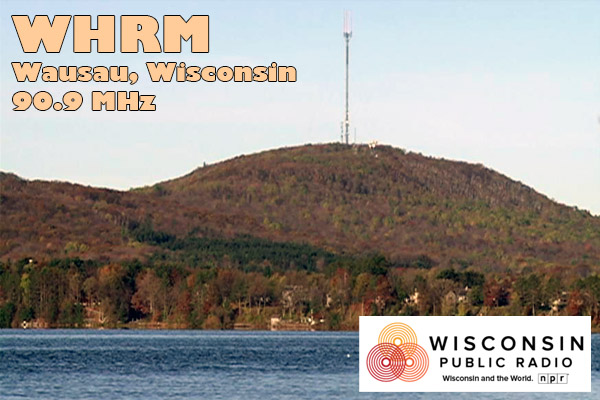
At 2040 UTC Thursday, I logged WHRM on 90.9 MHz from Wausau, Wisconsin, 871 miles to the west-northwest using my ICOM IC-R8600 receiver and ICOM AH-7000 discone antenna. I assume the reception was via E-skip. The 871-mile path is my second best DX on the FM band!

Friday, April 3, 2020

92.9 MHz Pirate


This morning, I tuned around the FM band and discovered a pirate radio station on 92.9 MHz with shouting male and female DJs playing rap music. The station was fading in and out and had lots of competition from WEHM, so I never heard any identification. But I clearly heard an ad for the Lion’s Den Restaurant in Hartford, CT, so I assume the pirate is located in the Hartford area, 30 miles to the northeast. Receptors here were my ICOM IC-R8600 and ICOM AH-7000 discone antenna.

Tuesday, December 3, 2019

Loop on Ground Antenna Test

I assure you that there is a Loop on Ground (LoG) antenna in this photo.
Over the long weekend, I tested my newly installed Loop on Ground (LoG) antenna.

I compared the LoG’s reception with the other antennas installed here at WA1LOU by noting the signal strength of 23 random stations across the AM band using the dBμ reading [absolute voltage (Terminated)] of my ICOM IC-R8600 receiver. (The other antennas here are an 80-meter dipole, a Hy-Gain 18AVT/WB-A vertical and a ICOM AH-7000 discone.)

The following stations were used in the comparison: WMCA on 570 kHz, WPRO 630, WFAN 660, WOR 710, WGY 810, WNYC 820, WCBS 880, WLAT 910, WPKX 930, WNTY 990, WINS 1010, WBZ 1030, WTIC 1080, WMRD 1150, WWCO 1240, WSPR 1270, WATR 1320, WFNW 1380, WVEI 1440, WFED/WFIF 1500, WQEA416 1670, WPTX 1690 and WRCR 1700.

I ran the test on three consecutive mornings and on one evening. In general, the results were consistent during all four runs of the test. The only anomaly was hearing WFED loud and clear on 1500 kHz at 1447 UTC on 29 November. WFED is always loud and clear at night here, but is usually down in the mud under WFIF during daylight. Go figure.

After the first and second run of comparisons, I eliminated the vertical and discone antennas from the test to save time because the dipole consistently scored higher than the vertical and discone.

On average, the LoG performed 8.5 dBμ units higher than the 80-meter dipole. With a 22 dBμ unit difference, WSPR had the greatest signal improvement on the LoG. Right behind WSPR were WBZ, WWCO, WATR and WVEI with 17 dBμ improvement on the LoG.

The dipole performed equal to or slightly better (by 1 or 2 dBμ units) with WPRO (daytime only), WGY (daytime only), WCBS (all times), WLAT (all times) and WNTY (all times). WPRO and WGY were stronger on the LoG in the evening by 9 and 6 dBμ units respectively, which represents a 11 and 7 dBμ swing between day and night.

Overall, the LoG performed better at the top and bottom of the AM band and less so in the middle of the band (810 to 1150 kHz) except for one outlander: 50kW WTIC 1080, which is line-of-site from here. WTIC consistently scored in the low to mid 70’s dBμ-wise.

The first three tests were run under dry conditions, while the fourth test was run with the antenna covered with about six inches of snow. The snow did not seem to have any effect on the performance of the LoG.

In conclusion, I am very impressed with the LoG antenna. It is a keeper and I plan to install a larger version in the spring.

Thursday, November 28, 2019

Loop on Ground Antenna

Wednesday, 40 degrees, breezy, overcast, rain in the forecast – a good day to put up a new antenna – NOT. But I was not to be deterred by Mother Nature.

Actually, I did not put up a new antenna; I put down a new antenna: a Loop on Ground (LoG) receive-only antenna as described by Matt Roberts, KK5JY: 60 feet of insulated
wire stapled to the earth in a square configuration (15 feet per side).

I had prepared the wire the day before the install, so it only took about two hours to complete the install. The most time-consuming part was running the RG-6 into the radio shack from outdoors.

I was not sure how well the antenna would perform. Due to the holiday, I did not have a lot of time to give the antenna a thorough test, but the initial results were very good. Tuning through the AM band for about 30 minutes Wednesday evening, nearly all the stations I checked were stronger on the LoG antenna than on my other antennas (80-meter dipole, Hy-Gain 18AVT/WB-A vertical, ICOM AH-7000 discone).

After I digest today’s Thanksgiving feast, I plan to devote a lot more time to kicking the tires of the LoG and I will report my findings here.

Tuesday, October 22, 2019

Two More


Good conditions continue and I logged two new stations.

WTNY on 790 kHz transmitting 1 kW from Watertown, New York, 221 miles to the northwest

WGCR on 720 kHz transmitting 15 kW from Pisgah Forest, North Carolina, 686 miles to the southwest

Both stations were logged using the ICOM IC-R8600 receiver and ICOM AH-7000 discone antenna.


Sunday, October 20, 2019

Yet Another Good Night


Conditions have been very good this past week.

Saturday evening, the 162-MHz NOAA weather radio band lit up and I was copying at least one station on each of the weather radio channels, which is not normal. Nothing new to enter in the log, but I was very surprised to find that band opened at this time of year and that time of day (2330 UTC).

Later in the evening, I noticed Cuba’s Radio Rebelde besting WHAM on 1180 MHz. Again, not a new log entry, but I did copy two other stations that were new to the log:

WQLR “The Fan” on 1660 kHz transmitting 10 kW from Kalamazoo, Michigan, 650 miles to the west-northwest

Navigational beacon ZNS on 385 kHz transmitting 25 watts from Halifax, Nova Scotia, 531 miles to the northeast.

The ICOM IC-R8600 receiver, ICOM AH-7000 discone antenna (for WQLR) and 80-meter dipole antenna (for ZNS) were my ears of choice.

Friday, July 5, 2019

July 5 Coastal Tropo


Mid-morning coastal tropo and the NOAA radio station in Southard, New Jersey, was loud and clear, so I moseyed over to the FM band and logged a new station: WCAI on 90.1 MHz. Licensed at Woods Hole, Massachusetts, the WCAI 12.5 kW transmitter is actually located across Vineyard Sound on Martha's Vineyard, 121 miles from the WA1LOU receiving station, which was using an ICOM IC-R8600 receiver and ICOM AH-7000 discone antenna at the time.

Friday, June 28, 2019

WXM45 Logged

Lately, I check the vhf bands for enhanced propagation everyday after breakfast. I hit paydirt this morning on 162.425 MHz where I heard the Albany NOAA radio station WXM45 loud and clear for over an hour starting at 1230 UTC.

WXM45 transmits 300 watts from Middleville, New York, 147 miles to the northwest, which I received on my ICOM IC-R8600 receiver and ICOM AH-7000 discone antenna. At 147 miles, it is the most distant NOAA radio station I have received so far.